Is Weight Loss Surgery Safe? What Decades of Surgical Progress Tell Us
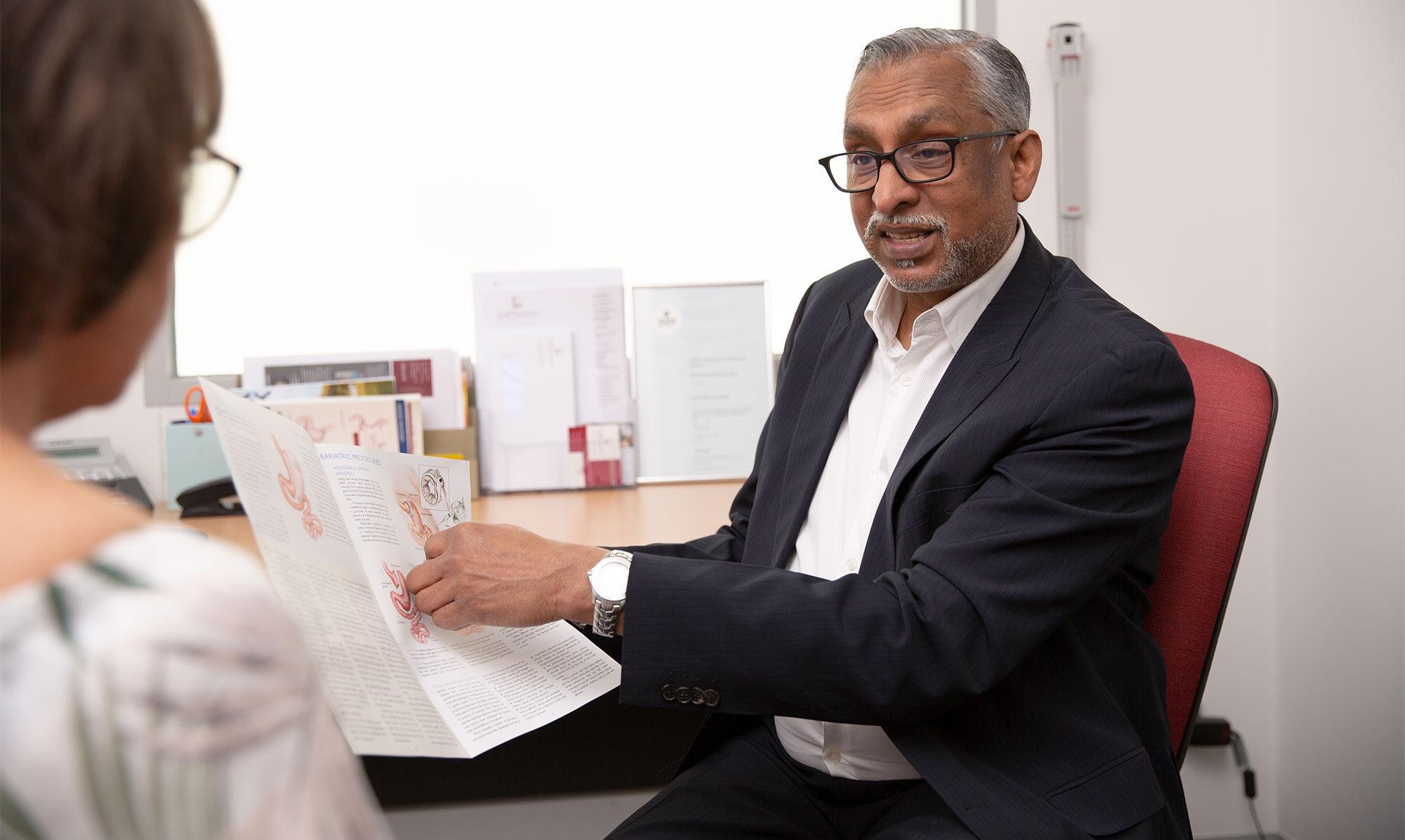
Safety is usually the first question people ask when they start looking into weight loss surgery. That is a completely reasonable place to start. The good news is that modern bariatric surgery, that is surgery designed to help people lose weight and improve their metabolic health, has an excellent and well-documented safety record. Our team at Lap Surgery Australia thinks it is important that you understand not just the numbers, but why those numbers have improved so much over the years, and what we do to keep driving them in the right direction.
Surgical Safety Has Improved Dramatically Over the Past Few Decades
To understand how safe weight loss surgery is today, it helps to look at how surgery in general has changed. Take gallbladder removal, known medically as a cholecystectomy (say: ko-leh-sis-TEK-toh-mee). Since laparoscopic, or keyhole, gallbladder surgery became standard in the late 1980s, surgeons have steadily refined the techniques and imaging tools used during the operation. The result has been a meaningful reduction in serious complications like accidental bile duct injury over time.
This kind of progress does not happen by accident. It comes from surgeons studying their results, sharing data, refining their approach, and being willing to change how they work when the evidence points that way. The same culture of careful, evidence-based improvement has shaped the evolution of bariatric and metabolic surgery over the same period.
Weight Loss Surgery Is Safer Than Many People Assume, and the Data Backs This Up
One of the most important things to know is that weight loss surgery, as a category, is now considered safer than gallbladder surgery. That fact surprises many people, because gallbladder removal is often thought of as a routine, low-risk procedure. It is a meaningful benchmark.
This safety profile is not just a claim. It is supported by real-world data collected through the Bariatric Surgery Registry, a national Australian database that tracks outcomes for patients who have had weight loss surgery. When outcomes are tracked across thousands of real patients over many years, patterns become clear, risks can be identified early, and improvements can be made systematically. That kind of transparent accountability is what turns a good safety record into a great one.
The Bariatric Surgery Registry Keeps Our Team Accountable to You
Contributing to the Bariatric Surgery Registry is something our team at Lap Surgery Australia takes seriously. Here is why that matters to you as a patient.
- Your outcome data, de-identified to protect your privacy, helps build a clearer national picture of how weight loss surgery performs across Australia.
- Patterns in the data can reveal whether certain techniques, patient groups or care approaches are linked to better or worse outcomes, prompting refinements in practice.
- Participation in the Registry signals a commitment to transparency. Surgeons who submit their data are agreeing to measure themselves against the evidence.
- Over time, the Registry helps the surgical community identify what best practice looks like and update it as knowledge grows.
This is incremental improvement in action. It is not dramatic or headline-grabbing, but it is how surgical fields become safer decade by decade.
What This Means When You Are Thinking About Your Options
If you are weighing up whether weight loss surgery is right for you, the safety question deserves a clear and honest answer. No surgical procedure is without risk, and your individual health picture will always affect what is appropriate for you. A thorough assessment with an experienced surgeon is the right starting point.
What the evidence does tell us is that bariatric and metabolic surgery is performed within a culture that takes safety seriously, measures its own performance, and keeps improving. That is not a small thing. It is the foundation of good surgical care.
The specific risks and benefits relevant to your situation are something our team will walk through with you in detail at your consultation. There is no pressure and no rush. The goal is simply to give you the information you need to make a confident, informed decision.
If you are considering your options, call us on (03) 9760 2777 or request an appointment through our website.